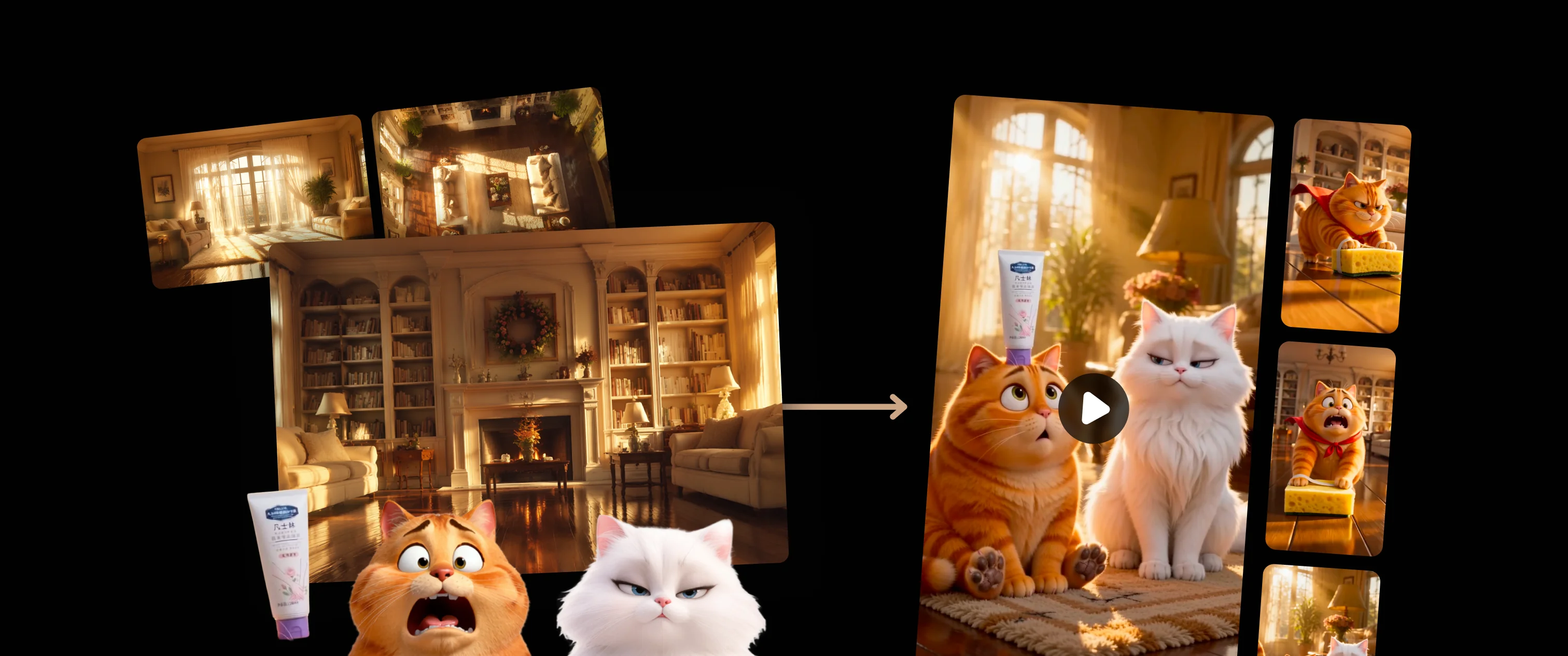
AIGC e-commerce advertisement video examples

2026

AIGC Video Automation

Exploring how AIGC can turn product and trend signals into better-performing e-commerce advertisement videos. Creating a reusable workflow for generating trend-led video ads.

TIMELINE

2026 Jun - 2026 Aug

TEAM

2 Designers, 1 Product Manager, 1 Developer

ROLE

AI Product Design Intern @TikTok

SKILLS

AI Workflow, AIGC, Prompt Engineering, Video Strategy

OVERVIEW

At my internship at TikTok, my team collaborated with the TikTok User Growth team to explore how AIGC can turn product and trend signals into better-performing e-commerce advertisement videos.

01

AI Workflow Building

Exploring how to create a workflow that generates high-quality videos with minimal human intervention.

02

Prompt Engineering

Editing prompts for plot, script, character, and scene descriptions to support a reusable AIGC workflow with strong results.

03

Video Strategy

Exploring different video formats and styles, then evaluating how effectively they can be produced through the AIGC workflow.

AIGC video automation overview demo

GOAL & SUCCESS METRIC

Goal: Create advertisement videos that deliver strong performance results, and build a workflow that can later support automatic generation at scale.

Success metric 01

New additions per creative

How many new users a single video material can drive.

Success metric 02

Spend per creative

How strongly a material performs in ad delivery, measured by spend per creative.

SOLUTION

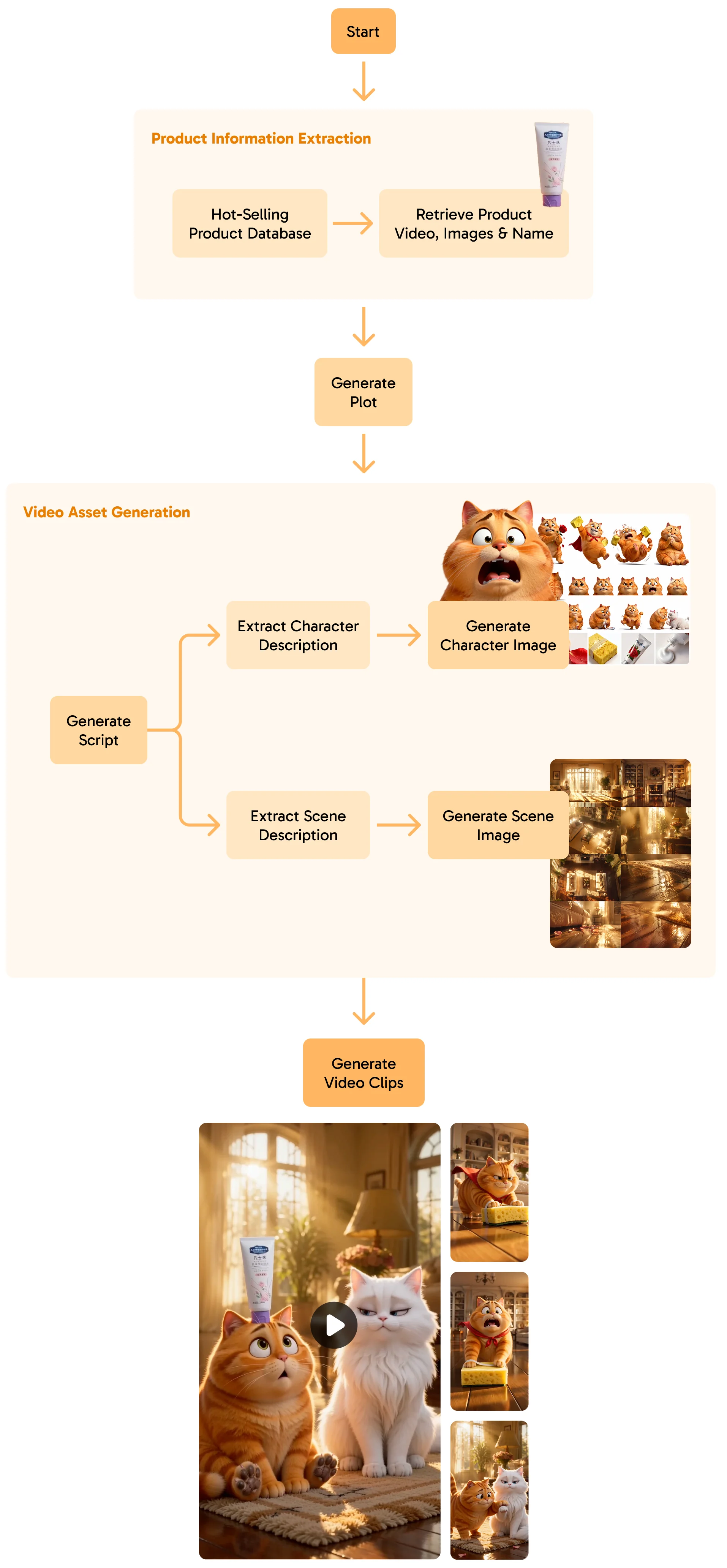
A creative automation workflow that turns one product brief into several ad-video directions.
IMPACT

The 投放数据复盘 delivery review found that several generated materials performed better than the agency-made and other production-path baselines.

2 CIDs

Agency benchmark exceeded

On Douyin, a single material generated 400+ new additions and about 7k in spend — exceeding the agency-video baseline.

3 CIDs

Clear production-path advantage

A single material generated 100+ new additions and 1k+ in spend, performing clearly better than the other production paths in the review.

NOW

Moving into automation

TikTok is putting the workflow into automation to create similar videos at scale.

NEXT

Expanding the system

A new system is being developed to capture hot topics and high-performing videos, turn them into human-made templates, and unlock more automated video types.

DETAIL

Each step turns a clear input into a tangible output that can be reviewed before the next step begins.

Workflow source diagram from the project brief

01 · Build the product brief

The workflow starts by translating raw commerce data into an instruction the creative system can use.

  • Input
  • Product link, title, product images, price, selling points, and target audience
  • Output
  • A structured product brief: key message, visual references, product assets, and the selected creative route
Short-drama concept generation example

02 · Generate the idea and script

The product brief is paired with a proven trend or video structure — such as a drama twist or rapid remix — to create a story people will recognize in the feed.

  • Input
  • Structured product brief, selected format, trend reference, and conversion goal
  • Output
  • A hook, plot beats, product-insertion moment, script, and shot-level content direction
AI-created character and scene visual example

03 · Create the visual world

The script becomes a coherent set of characters, scenes, and product placements that the video model can use as visual anchors.

  • Input
  • Script, character descriptions, scene descriptions, product image, and unified visual direction
  • Output
  • Character reference images, scene images, and product-placement visuals ready for generation
Generated video segment example

04 · Generate video segments

Instead of asking for one long, unreliable generation, the system produces the story as controllable video clips that can be checked independently.

  • Input
  • Script beats, product visual, character and scene references, and individual video prompts
  • Output
  • Short vertical video segments that match the approved story and visual direction
Finished vertical advertisement video output

05 · Assemble, review, and publish

The final stage turns the generated clips into a delivery-ready ad and creates a feedback loop for the next round of automation.

  • Input
  • Approved video segments, captions, voiceover, fixed elements, end card, and campaign requirements
  • Output
  • A final 9:16 advertisement video, ready for AI and human review, platform delivery, and performance analysis

PROCESS & REFLECTION

Turning an exploration into a reusable creative system.

Explore formats before automating them

I tested short-drama insertion, rapid remix, AI short drama, animation, and IP-led routes to understand where each structure could create attention for a product.

Make the creative choices reviewable

Staging the process creates useful checkpoints: the hook, script, visual assets, edit, and delivery strategy can each be assessed and improved.

Let performance shape the next template

The most valuable output is not one video; it is a system that can learn from strong results and create the next automated template faster.

Share the system, not only the result

Sharing the exploration helped make the workflow actionable for the team and supported its transition into a broader automation effort.

VIDEO DEMOS

A selection of the completed vertical video outputs from the exploration.